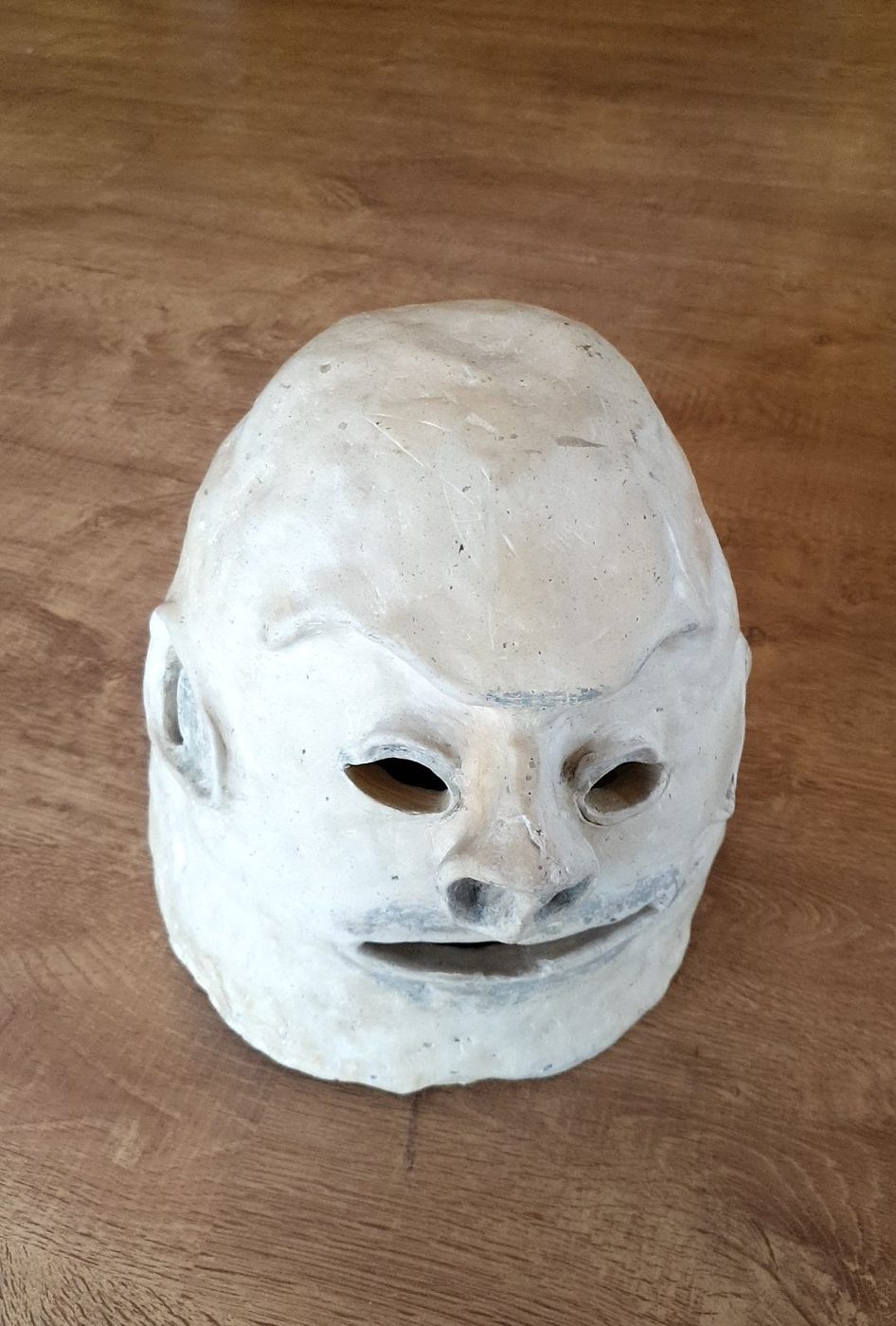
The Papua New Guinea spirit head in this collection is not merely a museum artifact — in Melanesian culture, this pale, hollow-eyed sculpture is an active, sacred portal that collapses time and brings mythic ancestors into the present. Activated by ritual movement, drumming, and chanting rather than static display, it commands awe and reminds us that the boundary between the living and the dead is powerfully porous.
The Legend of the Asaro Mudmen
This pale, hollow-eyed clay mask belongs to the tradition of the Asaro Mudmen, also known as the Holosa tribe, from the Eastern Highlands of Papua New Guinea. According to their tribal legend, a peaceful group of Asaro people were once attacked by a larger, hostile rival tribe. Outnumbered, the Asaro fled and hid in the muddy banks of the local Asaro River. When they eventually emerged from the water at dusk, their bodies and faces were completely caked in pale, greyish-white river mud.
Seeing these pale, slow-moving figures rising from the riverbank in the twilight, the enemy warriors mistook them for vengeful ghosts or ancestral spirits. Struck by absolute panic, the attackers fled. Realising the profound psychological terror caused by their muddy appearance, the Asaro adopted this as a deliberate defence strategy, intentionally crafting heavy, terrifying mud masks and adding elongated bamboo sticks to their fingers to invoke fear — channelling the spectral power of the spirit world to protect their village.
Capul-spirit din Papua Noua Guinee al acestei colecții nu este doar un artefact de muzeu — în cultura melaneziană, această sculptură palidă, cu ochi goi, este un portal sacru activ, care surpă timpul și aduce strămoșii mitici în prezent. Activat prin mișcare rituală, tobe și cânt, mai degrabă decât prin expunere statică, el impune uimire și ne amintește că hotarul dintre cei vii și cei morți este puternic poros.
Legenda Oamenilor de Noroi Asaro
Această mască palidă de lut, cu ochi goi, aparține tradiției Oamenilor de Noroi Asaro, cunoscuți și ca tribul Holosa, din Podișul de Est al Papua Noua Guinee. Potrivit legendei lor tribale, un grup pașnic de oameni Asaro a fost cândva atacat de un trib rival mai numeros și ostil. Copleșiți, cei din Asaro au fugit și s-au ascuns pe malurile noroioase ale râului Asaro din partea locului. Când au ieșit, în cele din urmă, din apă la asfințit, trupurile și fețele le erau întru totul acoperite cu noroi palid, cenușiu-alb, de râu.
Văzând aceste siluete palide, cu mișcări lente, ridicându-se de pe malul râului în amurg, războinicii dușmani le-au luat drept fantome răzbunătoare sau spirite ancestrale. Cuprinși de panică deplină, atacatorii au fugit. Dându-și seama de teroarea psihologică adâncă stârnită de înfățișarea lor noroioasă, cei din Asaro au adoptat aceasta drept strategie de apărare deliberată, făurind anume măști grele, înspăimântătoare, de noroi și adăugând bețe lungi de bambus la degete pentru a stârni teamă — canalizând puterea spectrală a lumii spiritelor spre a-și ocroti satul.